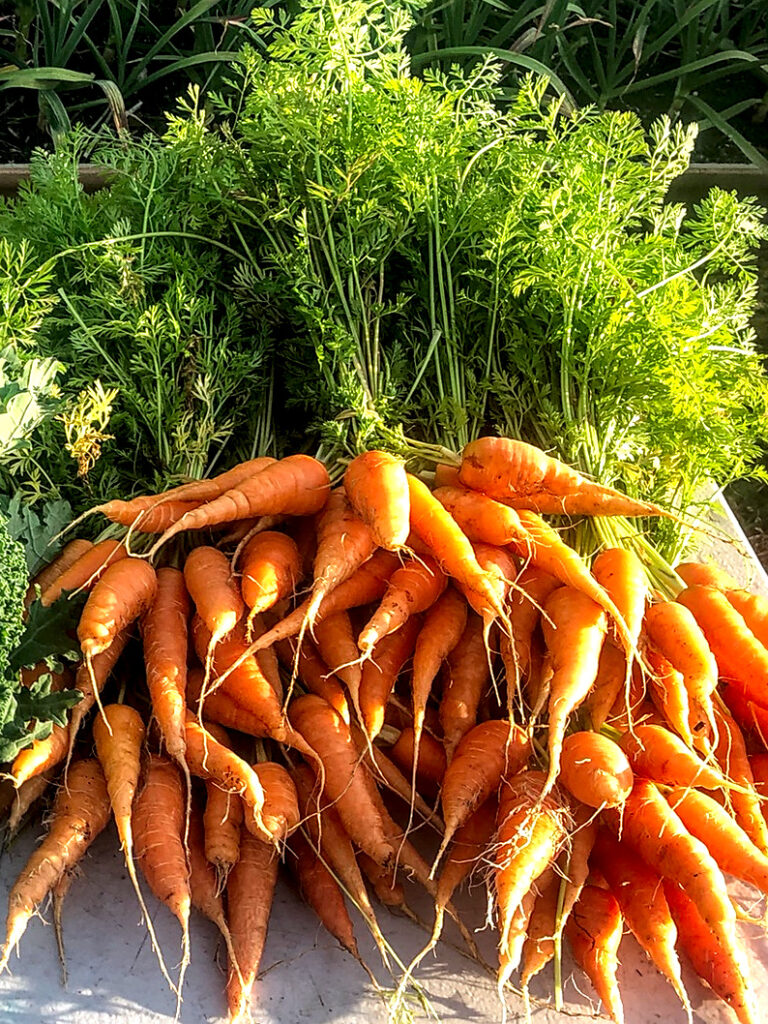
Winter Carrots are the best. The cool temperatures keep them sweet and the cool ground stores them like a fridge. They grow very slowly through winter so if you time it right, and you’ve got enough in, one planting of Carrots in Autumn can be harvested all Winter long.
Carrots are about a 90 day crop, making March the time for sowing for a Winter Crop. This is the second bed I’ve sown. It’s perhaps a little late but I had Strawberries waiting to go elsewhere. Any rate, it has timed nicely with a spell of rain, which has made the ground nice and damp. Which is important for carrots, as they need constant moisture until they germinate. At the moment it’s around 7 days before they pop, but I’ve had it blow out to 14 days. Which is the reason behind the Irrigation and row cover – maintaining moisture.
I’ve tried all manner of sowing techniques in the past – they all have their pros and cons.
The first bed this year was sown heavily in rows, which germinated fine, but was subsequently eaten by something (I assume grasshoppers). I luckily have a full bucket of seed so for this next bed I’ve taken the carpet bomb approach and broadcast seed heavily – like a Carrot cover crop. I’ve used this method before to counter both poor germination and critter consumption with success, the drawback being the subsequent plant thinning.
There’s been no special treatment to this bed other than loosening with a fork and a little Rock Dust. Like most root vegetables, little nutrition is required, as heavy feeding produces a poor crop, (i.e. lots of leaves, little roots). I also use the sandiest beds here, to avoid any underground diversions caused by rocks and so on.
Which brings up the necessity of direct sowing carrots. Almost as soon as they germinate, the tap root that is to be your carrot makes it’s way straight down. It’s a fine little hair of a thing and anything in it’s way will disturb it’s trajectory – which includes the bottom of a Seedling punnet. So they always need to be direct sown.
Some find carrots a little tricky to grow, and it’s true there is a learning curve, but they are a rewarding and abundant crop and well worth pursuing.